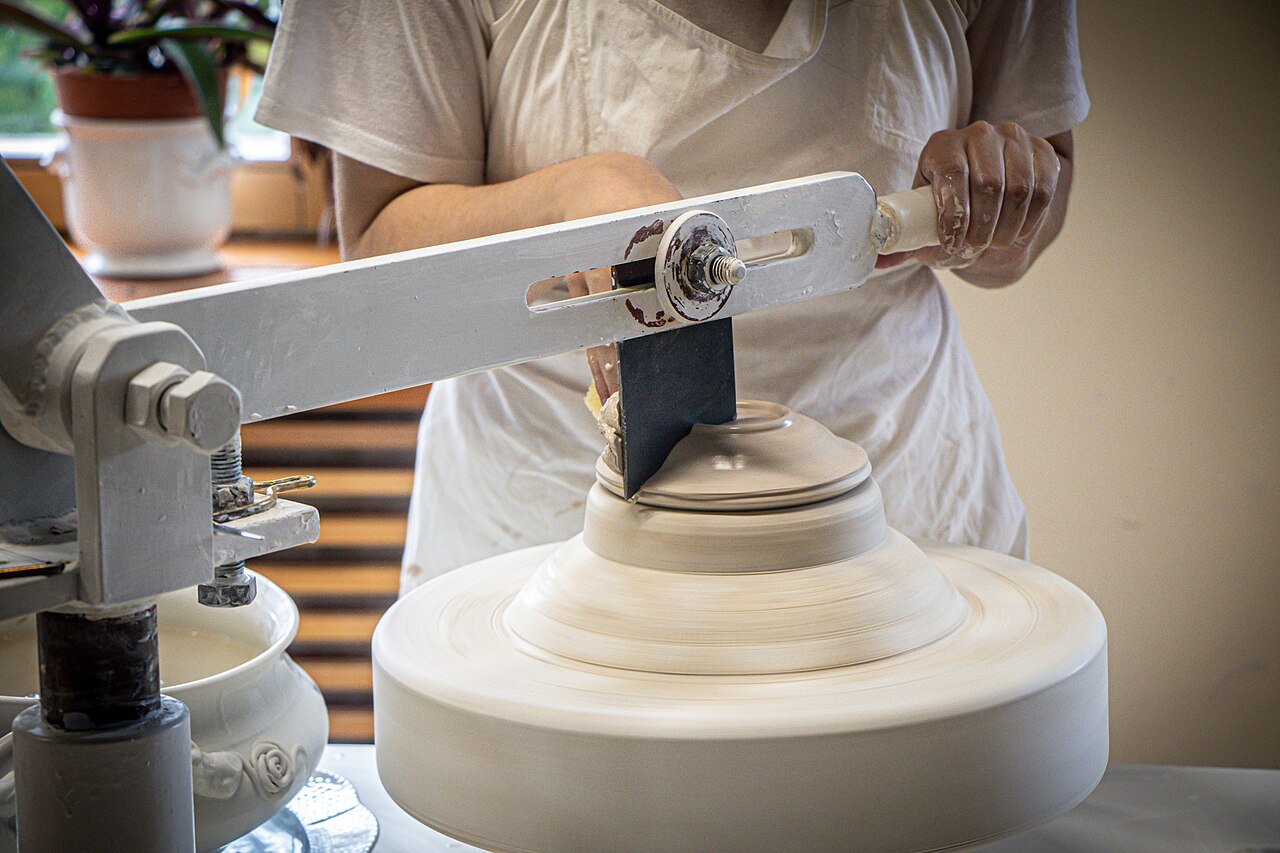
When people speak of Hungarian craftsmanship at its highest level, Herend porcelain is often the first name mentioned. Founded in the small town of Herend in Veszprem County, this manufactory has been producing hand-painted luxury porcelain since 1826 and remains one of the few places in the world where every piece is still shaped and decorated entirely by hand.
The Origins: How Herend Began
The story of Herend starts with Vince Stingl, who established a small ceramics workshop in the village of Herend around 1826. The operation was modest at first, producing simple stoneware. It was not until Mor Fischer took over in 1839 that the manufactory began its transformation into a world-class porcelain house.
Fischer recognized a gap in the European porcelain market. Many older European factories were struggling, and wealthy collectors found it increasingly difficult to replace broken pieces from sets originally made in Meissen, Sevres, or Chinese export workshops. Fischer set about reproducing these patterns with extraordinary accuracy, eventually surpassing the originals in many collectors' eyes.

Iconic Patterns Every Collector Should Know
Herend's catalog includes over 4,000 hand-painted patterns, but several stand out as especially collectible and historically significant:
- Rothschild Bird (RO) - Perhaps the most recognized Herend pattern, featuring pairs of birds perched on branches. According to legend, it was inspired by a necklace belonging to the Rothschild family that was found in a tree after being stolen by birds. The pattern dates to the 1850s.
- Victoria Butterfly (VBO) - Created for Queen Victoria after she admired Herend's display at the 1851 Great Exhibition in London. It features butterflies, peonies, and other botanical motifs in rich, naturalistic colors.
- Apponyi (AV) - Also known as Chinese Bouquet, this pattern combines Indian flowers with Chinese-inspired compositions. Available in green, orange, blue, and other color variations.
- Gödöllö - A Art Nouveau-inspired pattern created in the early 1900s, named after the royal palace near Budapest. It is characterized by flowing organic lines and muted earth tones.
- Queen Victoria (VICTORIA) - Featuring large, boldly colored butterflies and peony blossoms, this remains one of the most popular patterns for dinnerware sets.
The Hand-Painting Process
What distinguishes Herend from many other porcelain manufacturers is its absolute commitment to hand craftsmanship. Every piece passes through approximately 40 pairs of hands before completion, and the entire decoration process is done by brush, without transfers or mechanical printing.

Young painters at Herend train for at least two years before they are allowed to work on production pieces. Master painters, who execute the most complex compositions, typically have decades of experience. This human element means that no two Herend pieces are perfectly identical, which is part of their appeal to serious collectors.
Collecting Herend: Practical Advice
For those interested in starting or expanding a Herend collection, here are some practical considerations drawn from experienced collectors and dealers:
- Authentication - Genuine Herend pieces bear the factory mark on the base, typically a blue underglaze shield with "Herend" and "Hungary." The mark has evolved over the decades, which helps date pieces.
- Condition matters - Unlike some antiques where wear adds character, porcelain collectors generally prefer pieces in excellent condition. Check for chips, cracks, restoration marks, and fading.
- Figurines vs. tableware - Herend produces both functional dinnerware and decorative figurines, particularly animal figures. Both categories have strong collector followings.
- Vintage vs. contemporary - Older pieces, particularly those from the 19th century, command premium prices. However, modern Herend pieces retain their value well and are still made using identical techniques.
"Each Herend piece carries within it not just paint and porcelain, but nearly two centuries of unbroken artistic tradition. When you hold a Herend plate, you hold the work of hands trained in a lineage stretching back to the 1820s."
Visiting the Herend Porcelain Museum
The Herend Porcelanium, located adjacent to the manufactory in the town of Herend, offers visitors an immersive experience. The museum displays historical and contemporary pieces, and guided tours of the working factory allow you to watch painters, sculptors, and molders at work.

The town of Herend is located about 120 kilometers west of Budapest, in the Bakony Hills. It can be reached by car in under two hours, or by train via Veszprem. Many visitors combine a trip to Herend with a visit to nearby Lake Balaton, particularly during the summer months.
Herend's Place in the Global Porcelain Tradition
In the wider context of European porcelain, Herend occupies a distinctive position. While Meissen (Germany) pioneered European hard-paste porcelain in 1710 and Sevres (France) became the standard for French royal taste, Herend carved out its niche by combining exceptional hand-painting skill with an ability to interpret and refresh historical patterns.
Today, Herend competes not only with other luxury porcelain houses but also with the growing interest in contemporary ceramics and studio pottery. The manufactory has responded by collaborating with modern designers while maintaining its traditional techniques, a balance that keeps it relevant to both traditional collectors and younger audiences discovering fine ceramics for the first time.
For further reading, the official Herend website provides detailed information on current collections and factory visits. The Wikipedia article on Herend offers a thorough historical overview with references.


